BIM has never been left behind in the industry in relation to its requirements. Initially, it helped the architects go beyond 2D drawings. It would enhance coordination, decrease conflicts, and have teams on common digital platforms long enough that it would seem to be enough.
In the real world, the built environment is more than ever before. The buildings should be more efficient, long-lasting, adaptable, and resource-efficient. Simultaneously, owners want transparency, not complication, and results, not just deliverables. The conventional BIM processes are no longer adequate for these needs since they are predominantly design and construction-oriented. That is where the concept of BIM 6.0 fits in.
BIM 6.0 is Not a Software Upgrade
To begin with, one must know that BIM 6.0 is not a new tool that is being prototyped, but rather it is an unofficial version. It will not appear as a checkbox in the software updates.
Rather, BIM 6.0 can be said to be a phase of describing BIM maturity in its next generation, a maturity where BIM is no longer viewed as a project help tool but as a lasting digital assistant to buildings.
In the earlier stages of BIM, the questions were as follows
- How do we coordinate better?
- What are the ways we can minimize mistakes during the site?
- How do we deliver faster?
BIM 6.0 changes the priorities to the following questions
- What is the performance of this building on an annual basis?
- What information are we supposed to use to make it smart?
- What is the way digital information will help minimize long-term cost and risk?
Why Traditional BIM Thinking is No Longer Enough
BIM is most powerful in design and construction in the projects that are undertaken today. After the building is delivered, the model will be quite irrelevant. The facility teams use manuals, spreadsheets, or even individual systems, while the BIM model stays a reference file at most.
While traditional BIM usage often drops after handover, research shows that 80% of a building’s total cost occurs during its operational lifecycle, highlighting why BIM 6.0 focus on “continuity” is financially critical.
Any building has a lifespan of decades, but the use of BIM is not active throughout the entire lifespan. The funds that are spent on building, energy, maintenance, repairs, and upgrades take place after construction. With the loss of BIM in the handover, the prospect of long-term value is lost.
BIM 6.0 challenges this pattern. It claims that the actual value of BIM does not start at the end of the construction but at the time that the building is occupied.
The Core Idea Behind BIM 6.0: Continuity
The main principle of BIM 6.0 is a very straightforward concept: information continuity.
BIM 6.0 does not just make information available to meet the project milestones, as it motivates the teams to consider the later use of the available information. This model ceases to be an image of a photo but a system that develops alongside the building. The model stays relevant so that it will be a credible source of truth, not merely a document of design intent.
This means the digital model reflects
- Changes made during operation
- Upgrades and renovations
- Asset replacements
- Performance history
From Model Creation to Model Purpose
One of the biggest mindset changes in BIM 6.0 is the move away from model-centric thinking toward purpose-centric thinking.
In earlier BIM workflows, success was often measured by
- Level of detail achieved.
- Number of clashes resolved.
- Accuracy of drawings
In BIM 6.0, success is measured differently
- Is the information usable after handover?
- Does it support better decisions?
- Does it reduce uncertainty over time?
This does not mean geometry and coordination are less important. It means they are no longer the final goal; they are the foundation.
BIM as a System, Not a File
Another key shift in BIM 6.0 is how BIM is perceived.
Traditionally, BIM is treated as
- A model file
- A collection of drawings
- A project deliverable
In BIM 6.0, BIM is treated as a system.
A system that connects:
- Design intent
- Construction reality
- Operational performance
- Historical knowledge
This system view allows BIM to integrate naturally with other digital environments rather than sitting in isolation.
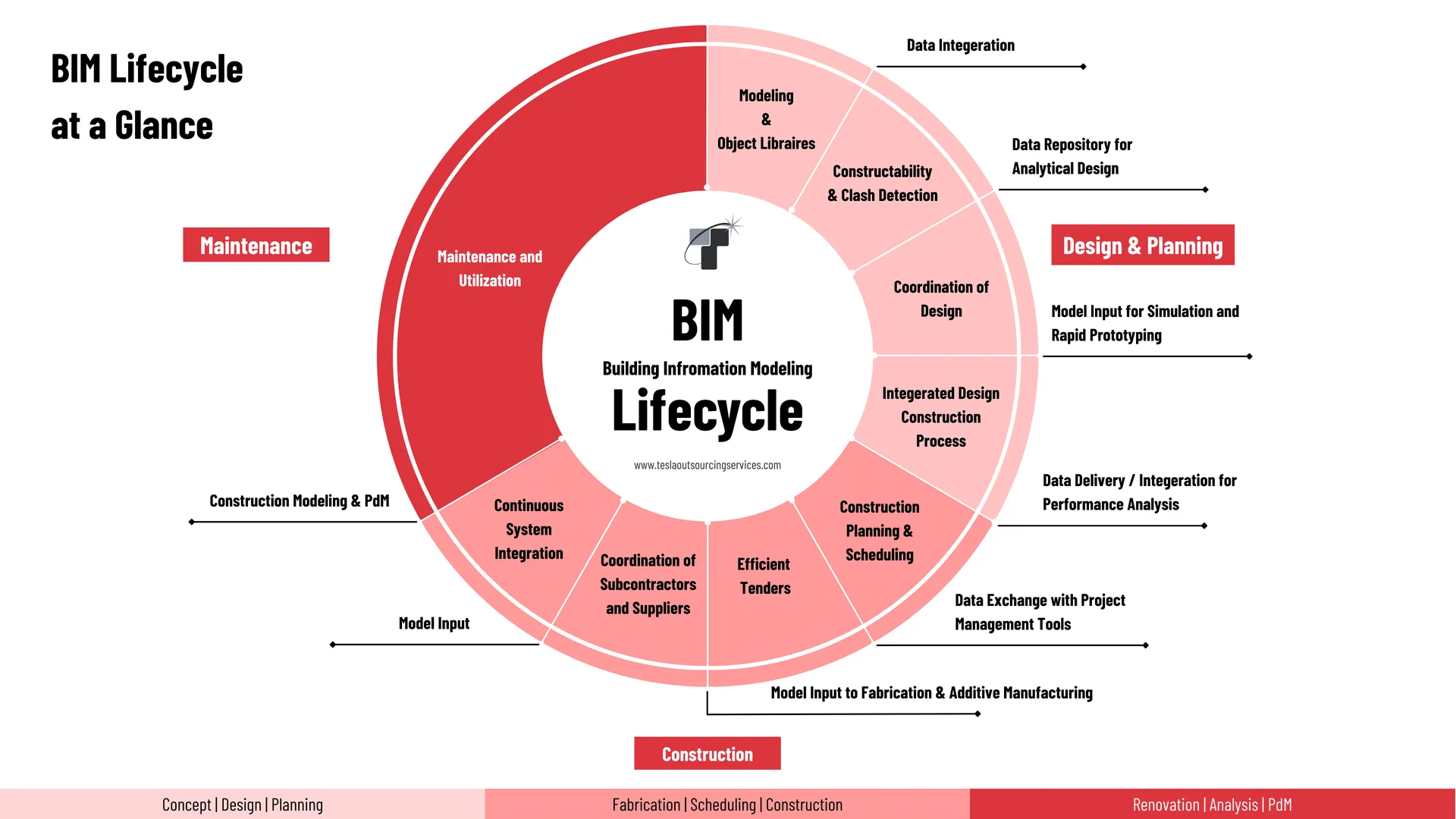
Life cycle of BIM
Digital Twins in 2026: Real Benefits for Facility Owners, FM Teams & Asset Managers
Read NowWhy is BIM 6.0 Appearing Now?
The timing of BIM 6.0 is not accidental. Changes are happening simultaneously across the industry. Digital platforms are more stable and accessible. Data storage and processing are no longer major barriers. Sensors and surveillance systems are creating more information on buildings alone. Above all, owners are posing better questions—related to performance, strength, and long-term value.
These changes require a sort of BIM that can sustain constant insight, not only project delivery. BIM 6.0 answers that demand.
When BIM Doesn’t End at Handover
One of the most noticeable shifts in BIM 6.0 is what happens after construction. Traditionally, handover marks the end of BIM’s relevance. In the BIM 6.0 mindset, handover is just a transition point.
Instead of delivering a static model, teams deliver a structured digital environment that stays useful. Facility and operations teams inherit information that is clear, connected, and meaningful—not a complex model they are unsure how to use.
This changes everyday operations in subtle but powerful ways. Maintenance decisions are faster because asset data is already organized. Renovations are also more assured, as they are aware of the prevailing conditions. Even basic processes, such as finding systems or learning dependencies, are less time- and effort-consuming.
The building is easier to manage, not simpler, but information is functioning in the background.
Performance Becomes Something You Can See, Not Guess
In earlier BIM workflows, performance was something discussed during design and reviewed occasionally during audits. BIM 6.0 brings performance into daily visibility.
Energy use, comfort levels, and system behavior are no longer abstract numbers on reports. They are tied back to spaces, systems, and assets within the digital model. This situation makes performance understandable to nontechnical teams.
When something isn’t working as planned, the teams can find the root of the issue and potential contributing factors. This lessens errors, miscommunications, and hasty decisions.
This visibility creates trust in the digital model and confidence in the decisions made based on its overall performance.
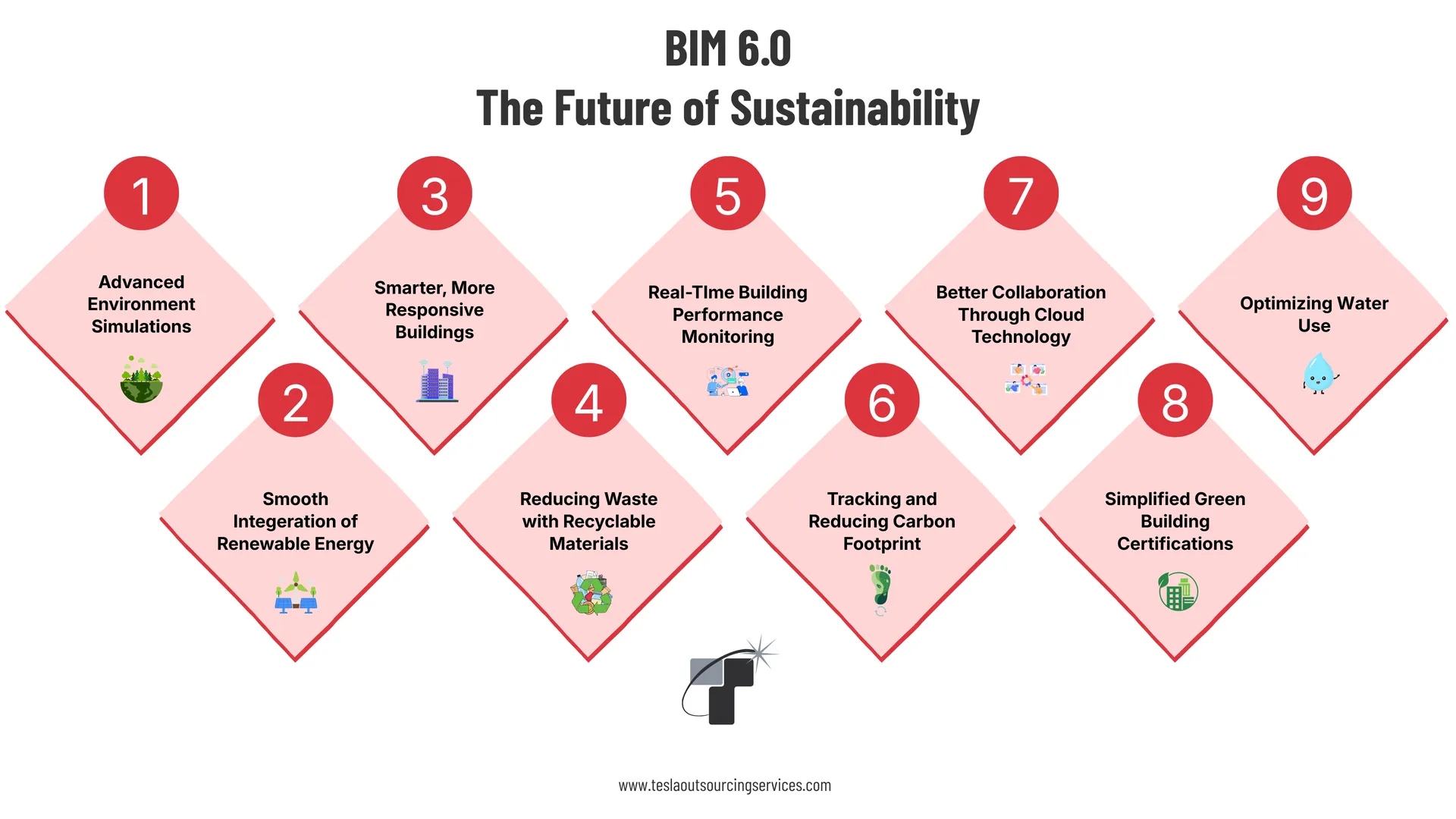
BIM 6.0 – The future of sustainability
Sustainability Moves From Promise to Proof
The concept of sustainability is usually talked about with good intentions in the design process, yet the intentions are put to the test in BIM 6.0, which is where the concept is put into reality.
In contrast to using only the estimated values, BIM 6.0 helps check the continued performance of a building. Energy efficiency, resource use, and indoor environmental quality are tracked over time, and this enables the teams to know whether the sustainability goals are being achieved in an actual sense.
Studies on digital maturity indicate that data-driven facilities management can reduce building energy consumption by up to 20%, aligning with the BIM 6.0 goal of moving sustainability from “promise to proof”.
This brings about a meaningful change. Sustainability is no longer a single-time goal that is associated with certification. It turns into the process of constant measurements, learning, and improvement.
This translates to the owners and operators making sustainability decisions that are informed, rather than conjectured. It forms a feedback loop among designers to make better future projects.
AI as Support, Not Control
Artificial intelligence is being used with BIM 6.0, which is not so dramatic as the headlines tend to portray. It does not substitute designers, engineers, and facility managers. Rather, it silently favors them. AI is used to seeing things that human beings overlook. It alerts to abnormal behavior, brings to the fore trends, and recommends areas that are worth looking at.
The integration of AI predictive analytics within BIM environments is projected to reduce maintenance costs by 10-15% by identifying equipment anomalies before failure—ScienceDirect
Over time, it becomes better at predicting issues such as equipment wear or performance drift. It is not the decision-maker but the level of informed decision-making. The amount of time taken by professionals to search for the problems is reduced, and the amount of time spent on making decisions on what to do is increased.
This balance keeps the human ability while making it sharper.
A Different Kind of BIM Professional
With the popularization of BIM 6.0, the role of BIM professionals has naturally changed. The technical modelling skills are not yet gone as the key differentiator. What matters more is understanding how information is used beyond the project phase. BIM professionals begin to think like asset managers, operators, and strategists, not just coordinators.
The most valuable question shifts from “Is the model accurate?” to “Is this information useful five years from now?”
This development improves BIM to be a strategic rather than a support tool. BIM professionals turn out to be mediators between design, real operation, and long-term aims.
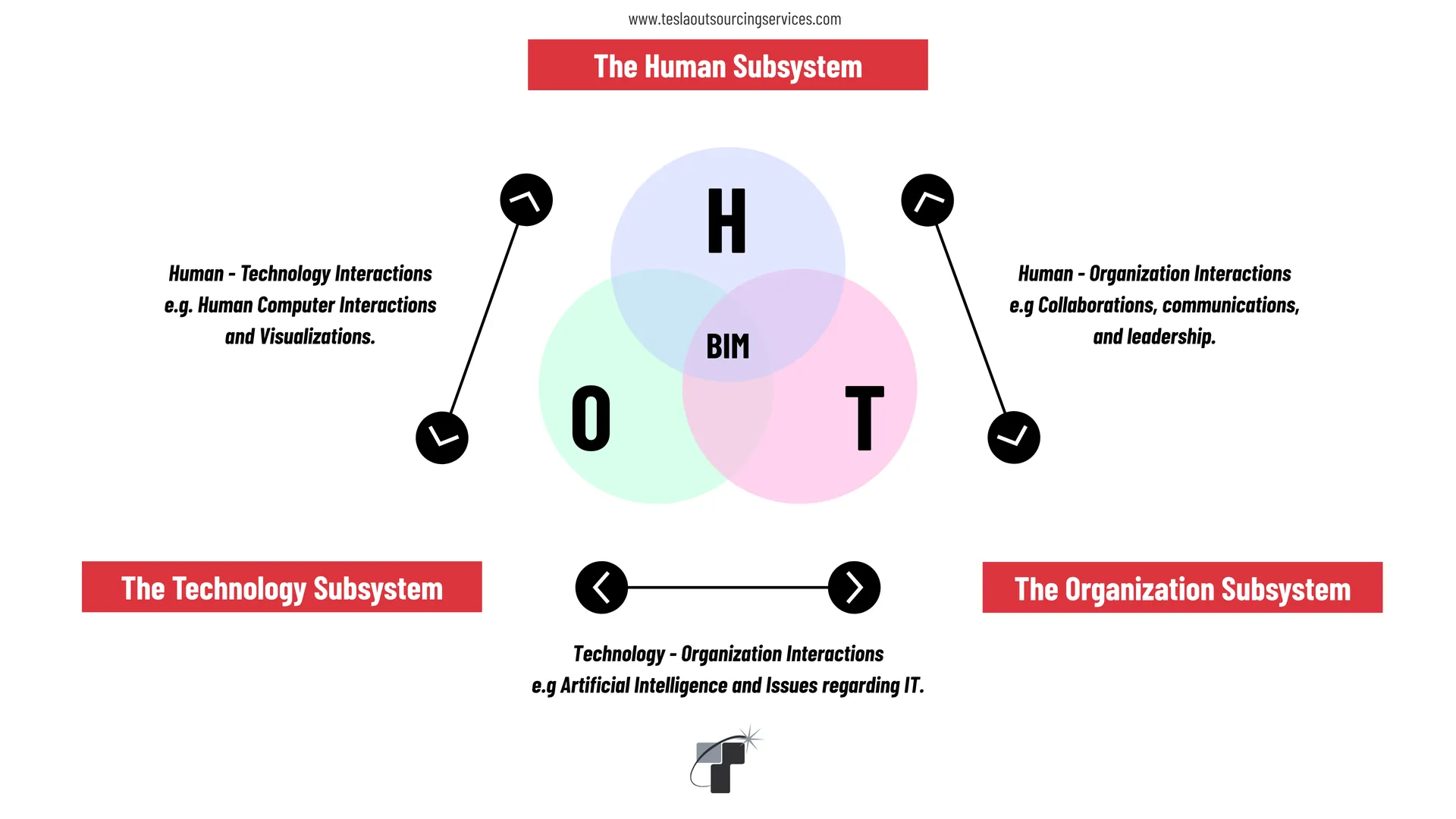
Challenges are human, not technology
The Challenges Are Human, Not Technical
Although BIM 6.0 requires the use of technology, the greatest obstacles are in other areas. The transition to BIM 6.0 means that organizations must concur with information creation, maintenance, and trust, among others. It involves having teams think beyond project duty and working towards a common long-term result.
It is not tools that are usually the reason behind the resistance, but habits. Making the shift from a project-based to a lifecycle approach is difficult. However, teams find it difficult to ignore the benefits once they experience the transparency and confidence that BIM 6.0 provides.
Conclusion
As the BIM 6.0 mentality matures, it will not just have an impact on individual buildings. Connected digital information will start to enhance portfolios, campuses, and infrastructure networks. BIM will be increasingly useful in making strategic decisions about where to invest, what to upgrade, and how to deal with risk. It will not only tell us how things are being constructed but also how they are designed, how they are financed, and how they are kept.
By that time, BIM will cease to be an expert process. It will become as natural as the management of the built environment.